
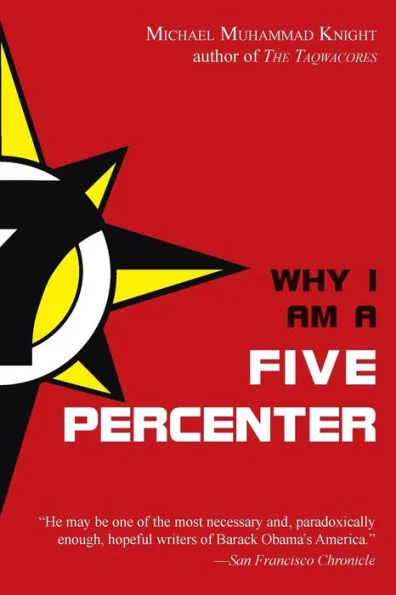
Description
| Author/Contributor(s): | Knight, Michael Muhammad |
| Publisher: | Tarcher |
| Date: | 10/13/2011 |
| Binding: | Paperback |
| Condition: | NEW |
A thoughtful, insider view of The Five Percenters-a deeplycomplex and misunderstood community whose ideas and symbols influencedthe rise of hip-hop.
Misrepresented in the media as a black parallel to the Hell’sAngels, portrayed as everything from a vicious street gang to quasi- Islamic revolutionaries, The Five Percenters are a movement that beganas a breakaway sect from the Nation of Islam (NOI) in 1960s Harlem andwent on to impact the formation of hip-hop. References to Five Percentlanguage and ideas are found in the lyrics of wide-ranging artists,such as Nas, Rakim, the Wu-Tang Clan, and even Jay-Z.
The Five Percenters are denounced by white America as racists, andorthodox Islam as heretics, for teaching that the black man is Muhammad Knight (“the Hunter S. Thompson of Islamic literature”-The Guardian) has engaged this culture as both white and Muslim; andover the course of his relationship with The Five Percenters, hispersonal position changed from that of an outsider to an acceptedparticipant with his own initiatory name (Azreal Wisdom). This hasgiven him an intimate perch from which to understand and examine thecontroversial doctrines of this influential movement. In Why I Am aFive Percenter, Knight strips away years of sensationalism to offera serious encounter with Five Percenter thought.
Encoded within Five Percent culture is a profound critique oforganized religion, from which the movement derives its name: Only FivePercent can act as “poor righteous teachers” against the evil TenPercent, the power structure which uses religion to deceive the Eighty- Five Percent, the “deaf, dumb, and blind” masses. Questioning his ownrelationship to the Five Percent, Knight directly confronts thecommunity’s most difficult teachings. In Why I Am a FivePercenter, Knight not only illuminates a thought system that mustappear bizarre to outsiders, but he also brilliantly dissects the veryissues of”insiders” and “outsiders,” territory and ownership, as theyrelate to religion and privilege, and to our conditioned ideas aboutrace.

Reviews
There are no reviews yet.